
“We need more products and fewer policies”
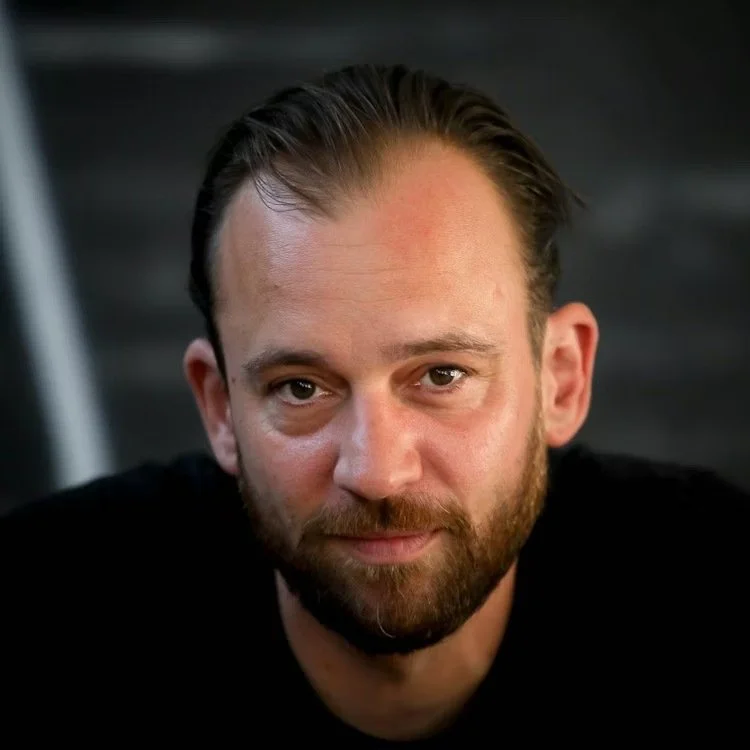
Simon Schaefer on EU-Inc, friction and Europe’s moment
For more than a decade, Simon Schaefer has lobbied for startups in Brussels. As Founder of Factory in Berlin and Chair of Allied for Startups, he has seen firsthand how European ambition often stalls in regulatory complexity. But with EU-Inc — the proposed “28th Regime” for startups — he believes Europe may finally be at an inflection point.
“This is the first time in a very long time that people say: I love Europe. I want to build here,” he says. “Now it’s on policymakers to provide the infrastructure to make that possible.”
From policy theory to product thinking
Schaefer describes EU-Inc not as another abstract legal framework, but as a product.
“A visa policy is not an abstract law — it’s a product for someone trying to apply for a visa. EU-Inc is the same. It’s a product for founders to start, fund and scale a company.”
For him, the core problem is not a lack of talent or ideas. It is friction.
“If you’re a startup in Spain raising from Germany, the transaction cost is often too high. If you’re governing a company across borders, it’s prohibitively complex. That friction kills momentum.”
He argues that fragmentation becomes existential before traction, precisely when founders transition from friends-and-family funding to venture capital. Without seamless access to Europe’s full market of 450 million people, early-stage companies struggle to generate the proof points investors demand.
The one-minute founder explanation
Asked how he would explain EU-Inc to a first-time founder, Schaefer answers without hesitation:
“You log onto a website. You create your company in minutes. You invite your co-founder to take shares. You onboard a US investor digitally. And everyone trusts the standard.”
For that to work, three principles are non-negotiable: optional, digital-first and standardised.
Optional, to respect member state sovereignty.
Digital-first, to create a single trusted database and simplify governance and due diligence.
Standardised, to eliminate deviation between countries and build investor confidence.
“If there’s even one local variation per member state, we’ve failed,” he says.
Legal predictability — the investor lens
For investors, fragmentation is not just inconvenient — it is a fiduciary risk.
“If you’re investing across borders, you need legal predictability. Different corporate, tax and insolvency rules make it harder to allocate capital responsibly.”
Schaefer points to a striking reality: nearly every European unicorn has raised the majority of its funding from the United States. Not because Europe lacks ambition, but because investors need trusted standards.
“That’s why EU-Inc is monumental. It makes every deal in Europe comparable and investable.”
A political turning point
When European Commission President Ursula von der Leyen publicly referred to the initiative as “EU-Inc” in Davos, it marked a symbolic breakthrough.
“We were on our weekly zoom call when someone said: stop everything — she just called it EU-Inc on stage,” Schaefer recalls. “It felt like a victory. But it’s only a short-term victory. Now we need to make sure it becomes a real solution.”
The next battleground is the European Council. Member states must agree — and unanimity may be required. The greatest risk in upcoming negotiations? Local deviation and loss of standardisation.
“The biggest concern is that we don’t get a single digital entry point and a single standard.”
Why this matters for smaller ecosystems
From a Swedish perspective — and for smaller, export-driven countries — EU-Inc could be transformative.
Small ecosystems already think cross-border from day one. In Portugal, Estonia or Sweden, scaling internationally is not optional; it is survival. A harmonised standard would level the playing field and reduce the structural advantage of larger domestic markets.
“It’s actually a small-country advantage,” Schaefer argues. “Flexibility and willingness to collaborate are stronger there.”
What success look like
If EU-Inc works as intended, five years from now Europe should see more startups per capita, more unicorns and a capital market capable of supporting them. Schaefer even dares to imagine Europe on its way toward its first €1 trillion company.
Failure, by contrast, would mean one more layer of complexity — another standard layered on top of existing ones.
“Deviation on a member state level would be a failure.”
A message to Europe’s founders
Despite the complexity of EU policymaking, Schaefer remains unapologetically optimistic — perhaps stubbornly so. When asked what he would tell founders at the very beginning of their journey, his answer is simple:
“Stay Euro. You don’t have to leave Europe just because you take US funding. And don’t stop believing in Europe.”
For him, EU-Inc is not just about corporate law. It is about preserving a model of society — one rooted in freedom, civil liberties and a capitalism that does not rely on exploitation.
“We need more products and fewer policies,” he says. “That’s how Europe competes.”
