
Techarena Highlights: The Roadmap to a Stronger New Nordic Capital Region
Strawberry Arena vibrated with energy. On the main stage, unicorn founders and global investors moved between keynotes and fireside chats. In the corridors, AI demos competed with climate tech prototypes for attention. Techarena – Scandinavia’s largest tech and business event – was buzzing.
At our side event, “Capital Strategies for a New Nordic Innovation Region”, a different kind of intensity took shape. Less hype, more hard questions. The event gathered policymakers, venture capitalists, founders and ecosystem leaders around a single, urgent theme: how to mobilise long-term capital to turn Nordic innovation into global industrial leadership.
The New Nordics – spanning Sweden, Estonia and the wider Northern innovation corridor – are emerging as one of Europe’s most dynamic innovation regions. Yet the conversation in the room was frank: innovation alone is not enough. To convert strengths in deep tech, climate tech and industrial transformation into global market leadership, the region needs more private and institutional capital, and it needs capital structures designed for scale.
A Wake-Up Call: Fewer Startups, Higher Stakes
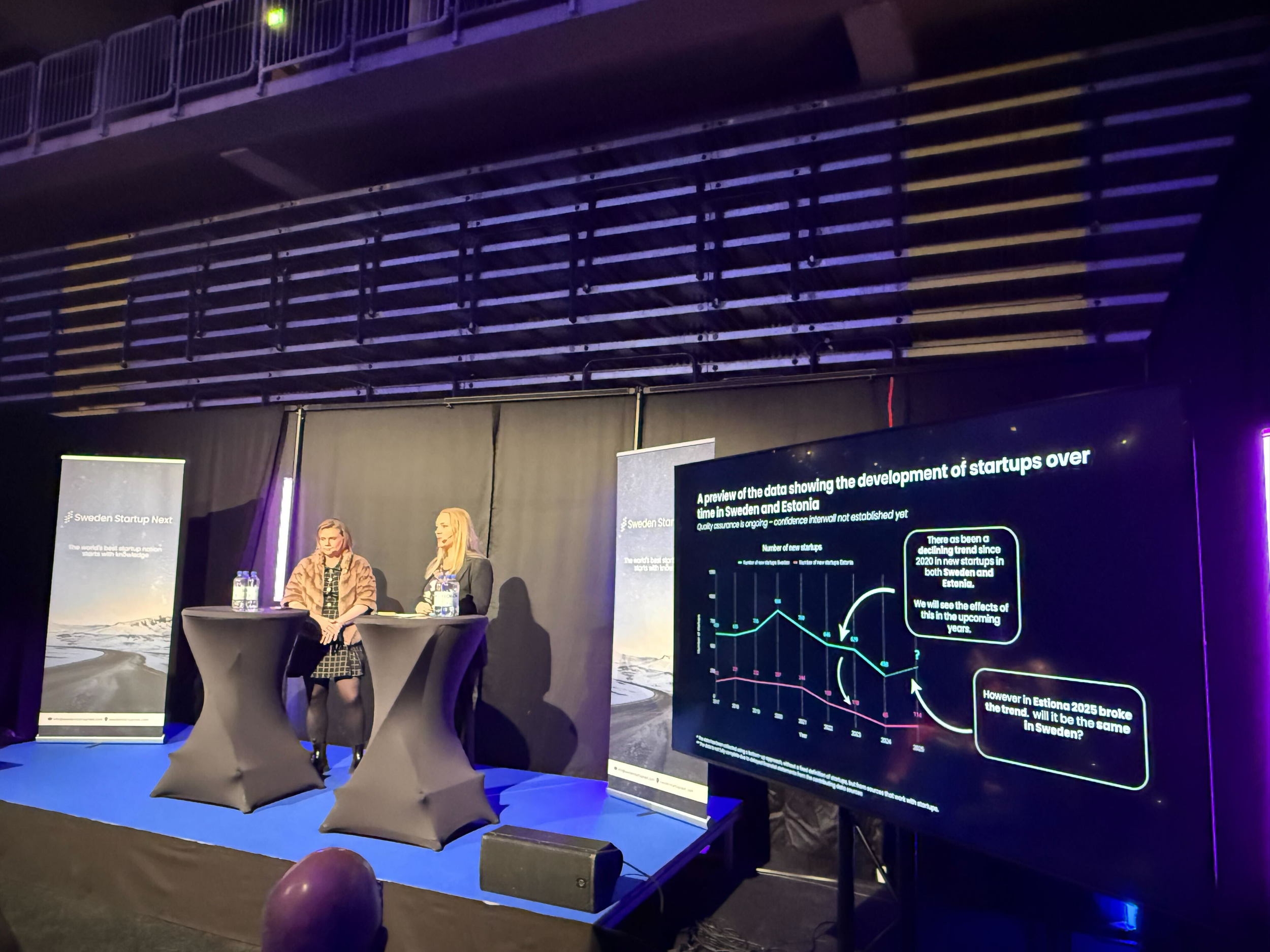
The session opened with fresh data from Sweden and Estonia. Since the pandemic, startup formation has slipped back to 2013 levels. War in Europe, inflation and broader geopolitical uncertainty have cooled risk appetite, and Stina Lantz, CEO at SISP and Sweden Startup Next and Kati Pärn, from Startup Estonia, debated whether this reflects a deeper ecosystem problem or a natural economic fluctuation. At the same time, the mix is shifting: defence technologies and AI are rising quickly and reshaping what gets built, funded and prioritized.
The question hanging over the room was whether the companies founded six to ten years ago—those now poised to become scaleups—will have the runway to actually make the leap. What do they need to contribute meaningfully to GDP, to industrial renewal, to long-term competitiveness? The recurring answer was clear: patient capital, smart regulation and an ecosystem that dares to take more risk.
The Institutional Capital Bottleneck
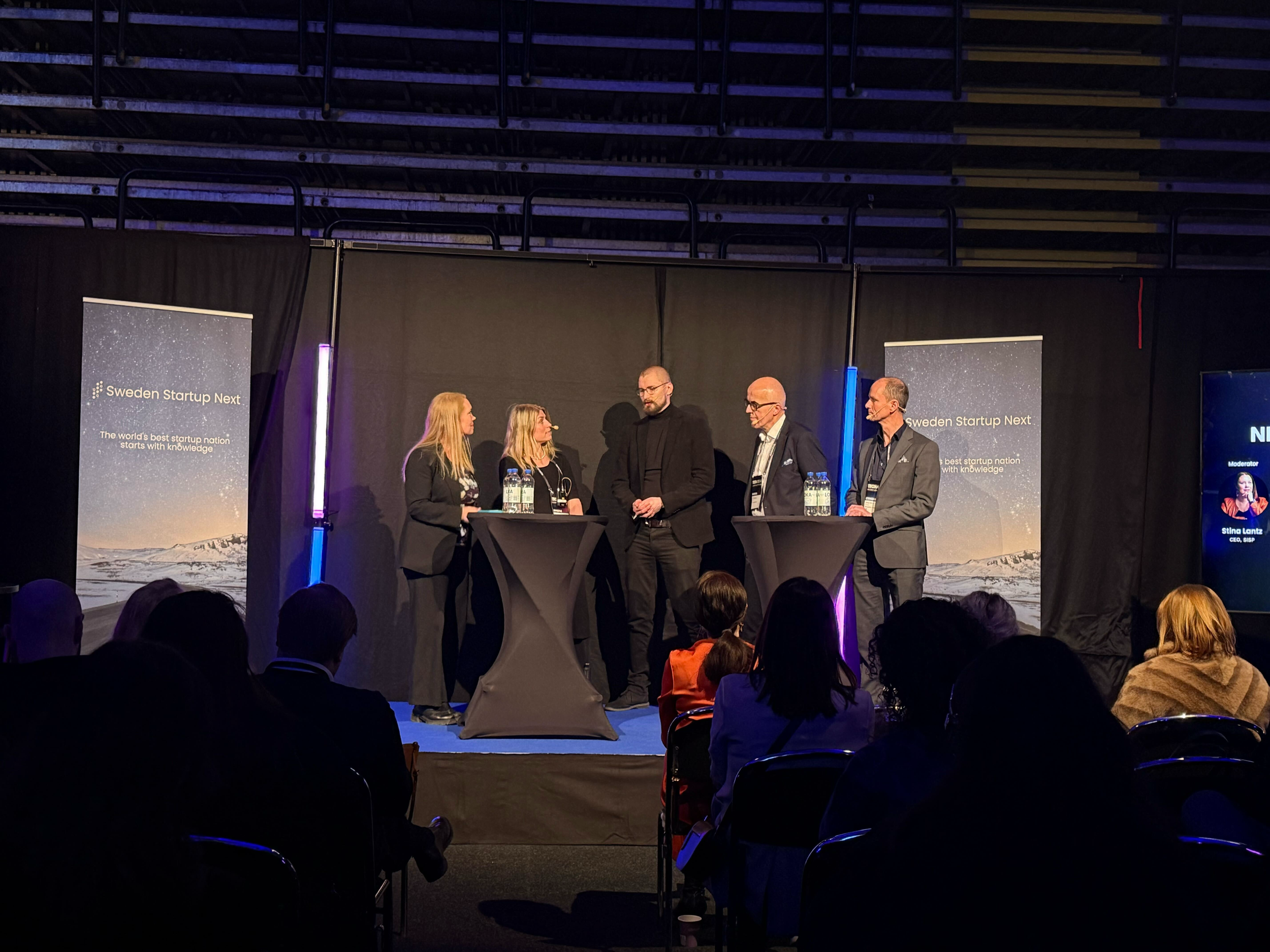
The panel — David Sonnek, CEO of Navigare Ventures and former CEO of Industrifonden; Rebecka Löthman Rydå, General Partner at Norrsken Evolve; Madis Lehtmets, Managing Director of EstVCA; and Peter Roos, CEO of Novatron Fusion — took the stage, moderated by Stina Lantz, CEO of SISP and Steering Committee member of Sweden Startup Nation/Next.
The conversation immediately focused on the central structural barrier: institutional capital.
Everyone agreed that pension funds and insurance capital must play a significantly larger role in Nordic and Baltic venture and growth investment. Yet allocations remain limited.
The issue, as described by the panel, is not simply lack of capital — it is system design. Institutional allocation structures are built for scale, predictability and cost efficiency. Pension teams are often small, while the tickets they need to deploy are large. That makes it structurally easier to invest in mature international vehicles than to build exposure through regional growth funds.
Europe, several speakers noted, has optimised for short-term stability and low volatility rather than long-term value creation.
The consequence is a structural mismatch. Nordic scaleups struggle to access growth-stage capital at meaningful scale, while European pension savers miss exposure to the innovation that could strengthen long-term returns. Safe on paper — but weaker in practice.
Deep Tech and the Global Industrial Race
The urgency becomes even clearer in deep tech.
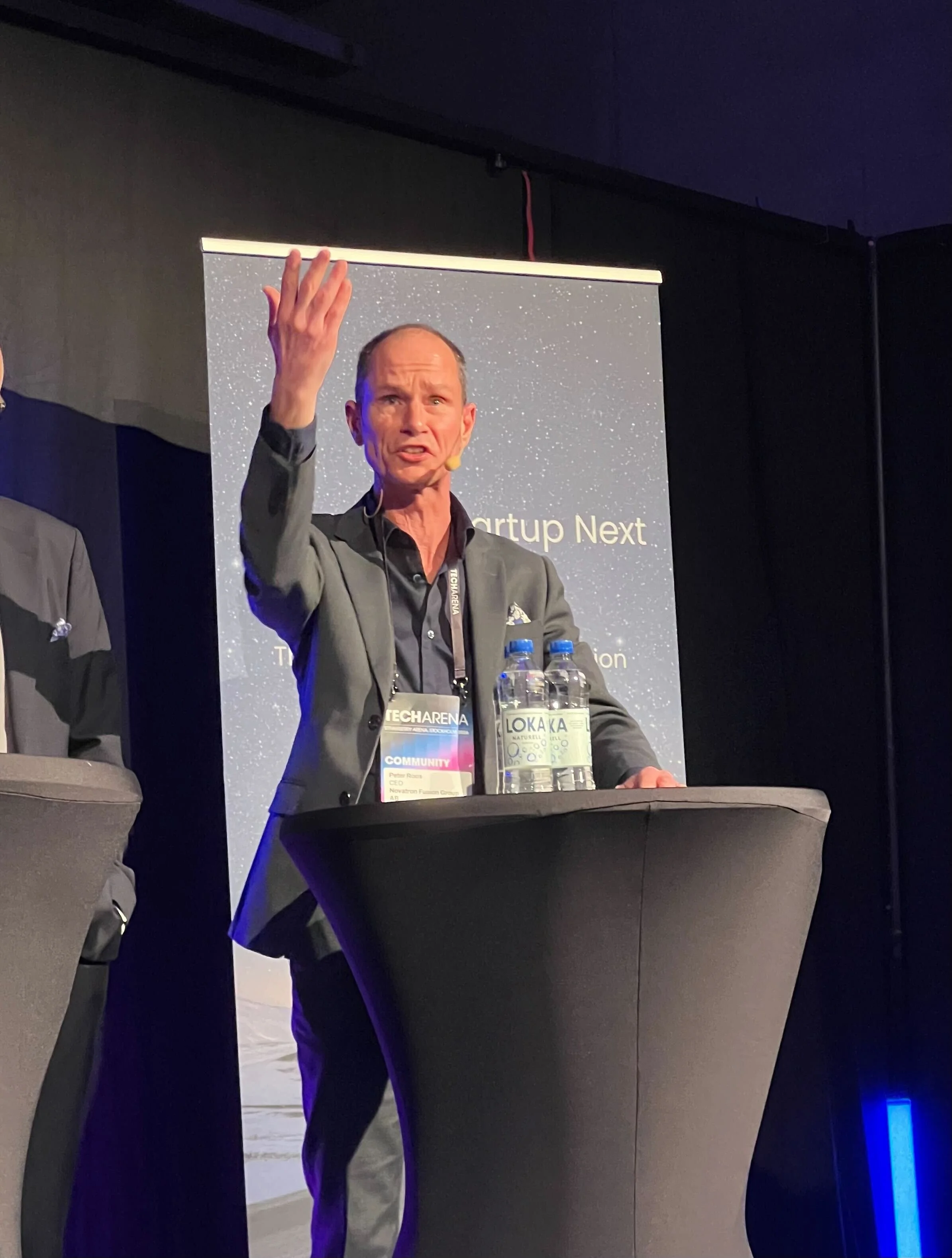
Peter Roos described fusion energy not as distant research, but as an industrialisation challenge already underway globally. The US and China are investing heavily, supported by both public funding and large private capital pools. Europe has far fewer players and significantly smaller funding rounds.
To compete in sectors such as fusion, quantum or advanced industrial transformation, early-stage venture capital is not enough. Companies require infrastructure-level funding, long timelines and policy alignment.
Without access to large-scale growth and infrastructure capital, Europe risks becoming the R&D department of the US and China — not the home of the next industrial platforms.
Capital Is Not Enough: The Customer Side
The discussion then turned in a sharper direction. Is capital really the main bottleneck? Or is it the lack of early, credible customers?
For industrial and deep tech companies, government procurement can be just as decisive as investment. If governments act only as regulators and not as buyers, innovation slows.
Several panelists argued that the Nordic region must move beyond “levelling the playing field.” In strategic sectors such as energy, defence and climate, governments must act as first customers and market makers.
Innovation procurement at scale can reduce risk, accelerate adoption and crowd in private capital. In high-trust Nordic societies, this could become a competitive advantage — if political courage matches ambition.
A Concrete Action List for the New Nordics
Unlike many ecosystem panels, this session ended with specific, actionable proposals. If the New Nordics are to become a unified capital region capable of powering Europe’s next generation of scaleups, several priorities stand out.
Startup Passport
A New Nordic Startup and Scaleup Passport would allow companies to operate seamlessly across borders, reduce regulatory friction and improve talent mobility. Treating Sweden, Estonia and neighbouring ecosystems as one capital market rather than separate national systems could significantly strengthen scale potential.
Cultural Exchange – Starting in the Nordics
Despite geographical proximity, ecosystems remain too siloed. The panel called for stronger cross-border LP–GP dialogue, joint investment initiatives and deeper founder collaboration. Trust and shared business culture are already Nordic strengths — they now need structural reinforcement.
New Nordic Fund – Blending Private and Public High-Risk Capital
One of the most concrete proposals was the creation of a New Nordic fund-of-funds structure. Designed to allow pension funds to allocate meaningful capital without building large internal teams, such a vehicle could also crowd in international investors seeking sizeable entry points into the region.
Crucially, this would not be a purely public pooling exercise. The ambition is to blend private and public capital intelligently, potentially using first-loss mechanisms or guarantees to unlock larger institutional participation.
Defining Moonshots – Long-Term Industrial Vision
Capital follows clarity. The region should define bold, coordinated “moonshots” in areas such as energy, quantum technologies, industrial decarbonisation and precision medicine. With aligned research, funding and procurement strategies, the New Nordics could send a long-term signal attractive to global investors.
Government as Buyer of Innovation
The most repeated call to action was clear: government must act as buyer of new innovation. Strategic procurement can accelerate scale faster than regulation alone. In a region known for strong institutions and collaborative governance, this is both realistic and achievable.
A Moment of Opportunity
Geopolitical shifts are reshaping global capital flows. Some international allocators are reassessing traditional destinations and increasingly looking toward Europe. The New Nordics have a window of opportunity to position themselves as a coherent, investment-ready corridor.
The atmosphere at Techarena was electric, but at our side event, the energy translated into something more durable than buzz: a strategic blueprint.
If the region moves from discussion to execution within the next 12 to 24 months, the New Nordics could do more than strengthen their startup ecosystems. They could help redefine Europe’s competitive position in the global innovation race.
And this time, the ambition was not just to talk about capital — but to mobilise it.
